१२ साउन २०८३ , मंगलबार | July 29, 2026 Wednesday
Published At: 2025-12-22 12:06 AM
Autism spectrum disorder (ASD) is increasingly recognized globally as a significant neurodevelopmental condition requiring long-term, multidisciplinary support across health, education, and social sectors. In Nepal, however, autism remains insufficiently understood, underdiagnosed, and inadequately addressed within the national health and social protection systems. While awareness has grown over the past decade, the country continues to face major gaps in data, service provision, trained human resources, and societal acceptance. These challenges are not unique to Nepal but are characteristic of many South Asian countries, where health systems are still largely oriented toward acute care and communicable diseases rather than developmental and lifelong conditions.
A major challenge in understanding autism in Nepal is the absence of reliable national prevalence data. Nepal does not have a centralized autism registry or routine developmental screening embedded within its primary healthcare system. Available figures are therefore fragmented, derived from localized surveys, disability registration records, or estimates by advocacy groups. Officially registered numbers of individuals with autism remain very low compared to population size, strongly suggesting widespread underdiagnosis. This data gap has significant implications: without credible estimates of scale and distribution, autism remains a low policy priority, limiting budget allocation, workforce planning, and service expansion. Similar data challenges exist across South Asia, although countries such as India and Sri Lanka have begun incorporating autism-related indicators into selected research and surveillance initiatives.
From a policy standpoint, Nepal has made some progress by recognizing autism within its broader disability framework. The Disability Rights Act (2017) provides legal recognition and entitlements for persons with disabilities, including access to disability identity cards, social security allowances, inclusive education, and protection from discrimination. However, autism-specific policy guidance remains limited. There is no national autism strategy, no standardized diagnostic pathway, and no dedicated national early intervention program. As a result, implementation is uneven, and many families experience delays in diagnosis and limited access to appropriate services, particularly outside urban centers.
The healthcare system’s capacity to respond to autism is currently constrained by a lack of trained professionals and weak integration of developmental care into existing services. Most public health facilities do not routinely screen young children for developmental delays, and frontline health workers often receive little or no training in recognizing early signs of autism. Diagnosis typically occurs late and is concentrated in tertiary hospitals or private clinics in major cities, creating geographic and financial barriers for families. Compared to some neighboring South Asian countries that have begun piloting early screening tools or specialist clinics, Nepal’s public-sector response remains minimal and largely reactive.
Rehabilitation and support services for autistic children in Nepal are limited in both availability and coverage. Specialized interventions such as speech therapy, occupational therapy, behavioral therapy, and parent-mediated interventions are essential components of autism management, yet they remain scarce and expensive. Existing services are concentrated in Kathmandu Valley and a few provincial urban centers, leaving large segments of the population without access. There is also a shortage of trained therapists, child psychologists, and special educators, which further constrains service quality and scalability. This reliance on a small, urban-centered service network mirrors patterns seen across South Asia, though countries with larger private and NGO sectors have achieved somewhat broader coverage.
Education represents another critical gap in autism management. Nepal’s commitment to inclusive education has expanded access for children with disabilities in principle, but practical implementation for autistic children remains weak. Many schools lack trained teachers, adapted curricula, classroom support, or sensory-friendly environments. As a result, children with autism often face exclusion, irregular attendance, or placement in settings that do not meet their developmental needs. Families frequently report that schools are willing to enroll children with autism but are unprepared to support them meaningfully, leading to frustration for both educators and parents. This situation reflects a broader South Asian challenge, where inclusive education policies exist but are insufficiently resourced.
Societal perceptions of autism in Nepal continue to shape care-seeking behavior and quality of life for affected families. Although awareness has improved in urban and educated communities, autism is still widely misunderstood, particularly in rural areas. Developmental differences may be interpreted as behavioral problems, poor parenting, or temporary delays, leading families to delay seeking professional help. Stigma and fear of social judgment can result in social isolation, reduced participation in community life, and psychological stress for caregivers. Similar patterns of stigma have been documented across South Asia, underscoring the importance of culturally sensitive awareness and community engagement efforts.
Despite these challenges, there are signs of gradual progress. Media coverage, parent advocacy, professional training initiatives, and international collaboration have increased the visibility of autism as a public health and social issue. More families are seeking diagnosis and intervention than in previous decades, and autism is increasingly discussed within broader conversations on disability rights and inclusion. However, this momentum has not yet translated into a coordinated national response.
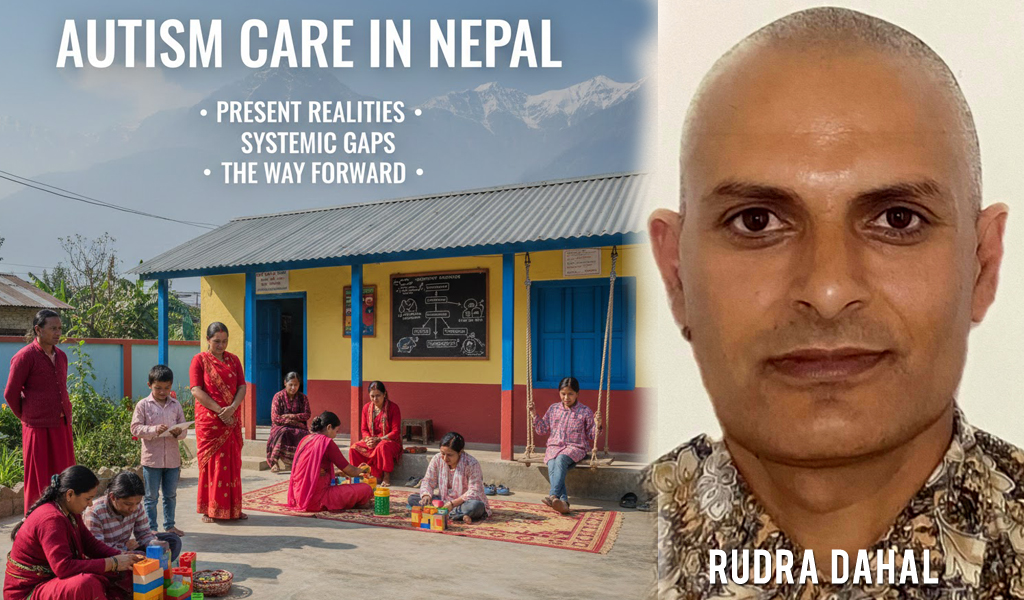
Looking ahead, Nepal’s next steps must focus on system-level transformation rather than isolated interventions. First, integrating routine developmental screening into maternal and child health services is essential for early identification. Simple, culturally adapted screening tools can be used by primary healthcare workers with appropriate training. Second, Nepal needs a national autism or neurodevelopmental strategy that outlines clear roles for health, education, and social sectors, supported by dedicated funding and monitoring mechanisms. Third, investment in human resources is critical, including training for pediatricians, nurses, therapists, teachers, and community health workers.
Expanding community-based rehabilitation models offers a practical pathway to improve access, particularly in rural and underserved areas. Parent training, peer support, and task-sharing approaches can help extend services beyond specialist centers while maintaining quality. In education, strengthening teacher training and school-level support systems is necessary to ensure that inclusion is meaningful rather than symbolic. Finally, sustained public awareness campaigns are needed to reduce stigma, promote acceptance, and encourage early help-seeking.
In conclusion, autism in Nepal represents a growing but still under-addressed national challenge. The present scenario is characterized by limited data, fragmented services, and significant inequities in access and understanding. While these challenges align with broader South Asian trends, Nepal has the opportunity to learn from regional experiences and adopt scalable, rights-based, and community-oriented solutions. Moving forward, a coordinated national approach that prioritizes early identification, inclusive education, rehabilitation, and societal acceptance will be essential to improving the lives of autistic children and their families.
……………………………………………………………………………………………………
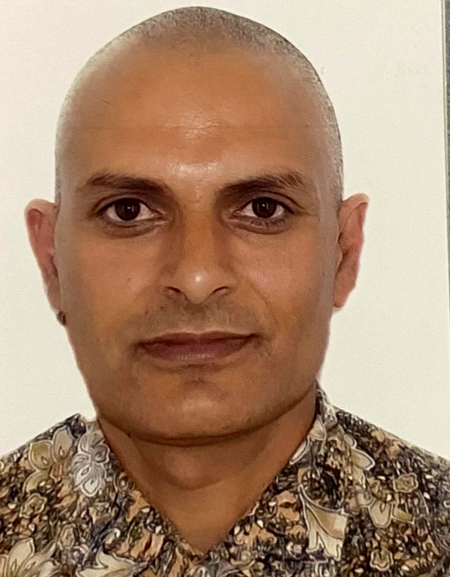
Author bio: Rudra Dahal is a public health researcher based in Calgary, Canada. He has extensive experience in community health, disability inclusion, and management in Nepal, England, and Canada.
Disclaimer: This article represents the author’s personal perspectives and does not reflect the views or positions of any affiliated institution.
© 2026 All right reserved to usnepaltoday.com | Site By : SobizTrend