६ कार्तिक २०८३ , बिहिबार | October 22, 2026 Thursday
Published At: 2026-10-19 09:22 PM
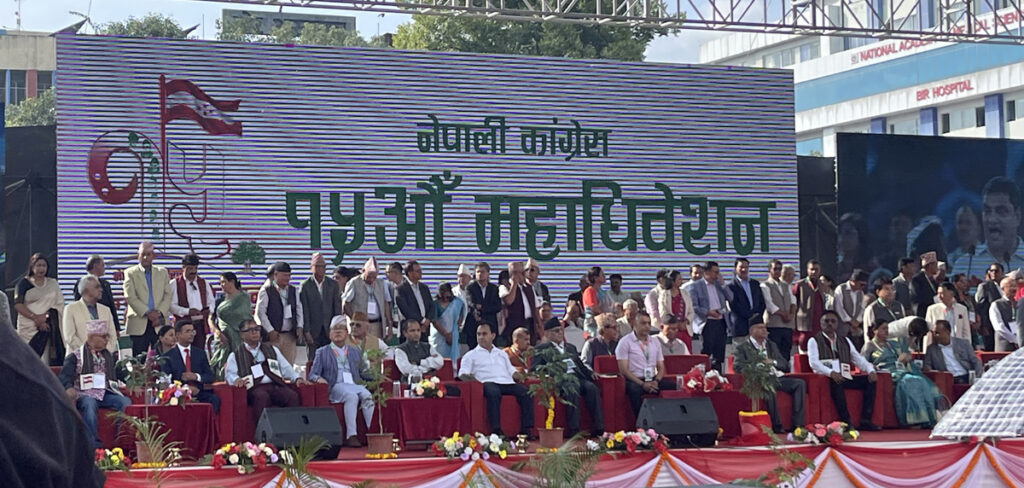
The 15th General Convention of the Nepali Congress has delivered a three-E result—Energizing, Enthusiastic, and Encouraging—offering a significant opportunity to institutionalize leadership change within the party. With President Gagan Thapa at the helm and a team of key office-bearers largely aligned with his leadership, the new party President has a strong foundation to transfer his mandate into action. However, the real test lies not merely in consolidating power, but in building a more inclusive, democratic, and accountable party that respects dissent, embraces diversity, and ensures meaningful participation in decision-making.
The real promise of leadership change lies in bringing young people and women into positions of real power, not merely offering them representation. Their participation must extend beyond symbolic roles to meaningful influence over policy formulation, organizational strategy, resource allocation, and key party decisions. Empowering youth with opportunities to lead, while ensuring women have an equal voice and share of authority, would help the Nepali Congress build a more dynamic, representative, and forward-looking political culture. Bringing generations together through shared leadership can combine the experience and institutional knowledge of respected senior leaders with the energy, innovation, and fresh perspectives of younger generations.
This transformation is particularly important as Nepal undergoes profound social and technological change in the digital era. Digital connectivity has transformed how citizens access information, express opinions, organize collectively, and engage with public institutions. Youths in Nepal and beyond, increasingly expect transparency, accountability, timely communication, and evidence-based policymaking.
Political parties can no longer rely solely on traditional organizational structures, believing in “Mero goru ko barai takka” अरूले जति सम्झाए पनि आफ्नो निर्णय मात्रै सही ठान्ने आदरणीय अग्रज नेताको बानी छ—ठ्याक्कै “मेरो गोरुको बाह्रै टक्का” भनेजस्तै राजनीतिक दलभित्र अरूको विचार नसुनी आफ्नै निर्णय लाद्ने”
and established methods of mobilization; they must also learn to engage meaningfully with digitally connected citizens. For the Nepali Congress, this means embracing digital communication, strengthening internal transparency, using technology to improve organizational coordination, and creating accessible platforms through which citizens can contribute ideas and scrutinize decisions.
However, digital transformation must go beyond maintaining a social media presence. It should help institutionalize participatory democracy within the party, enable young people and women to contribute directly to policy debates, and make decision-making more transparent and accessible. At the same time, the party must remain attentive to the digital divide, ensuring that people in rural areas, marginalized communities, and those with limited digital access are not excluded. Technology should widen participation rather than create new barriers. A political organization, Nepali Congress is capable of connecting its grassroots networks with the opportunities of the digital age will be better positioned to understand the changing aspirations of Nepal’s diverse population.
The Nepali Congress is grappling with deep internal conflicts, a reality well understood by both insiders and outside observers. Yet, the fundamental question is not simply how these conflicts appear to the outside world, but how the party itself understands and addresses them. The Congress’s internal self-awareness will shape its future political trajectory and determine its ability to fulfill the role expected of it. With local and provincial elections approaching, the party’s response to this moment of transition carries considerable significance.
At first glance, the new leadership structure and the representation of women and diverse communities appear encouraging. However, representation alone is not enough. The real question is how much influence office-bearers from different genders, generations, and communities will exercise over policy, resource allocation, and decision-making. The leadership must recognize that when marginalized communities remain confined to reserved positions, it reflects the continuing weakness of opportunities for equal competition. Inclusion must go beyond symbolic representation and create pathways for meaningful participation, leadership, and advancement. In this context, Binod Chaudhary’s decision to seek the inclusive vice-presidency was perhaps not the most appropriate choice.
The nomination of 66 Central Committee members will be the first major test of the new leadership’s commitment to reform. This provision offers an opportunity to strengthen trust by recognizing merit, maintaining regional balance, and bringing overlooked voices into the party’s mainstream. In particular, nominations should create opportunities for capable young leaders, women, and members of marginalized communities who have struggled to reach leadership positions through existing competitive structures. They should be given genuine opportunities to participate, develop their leadership, and compete on an equal footing.
Equally important, nominations must not become a mechanism for rewarding loyalists or accommodating personal interests. Using these positions to favor close associates would weaken the very message of change that the convention has generated. Inclusivity must be guided by merit, competence, and the capacity to contribute, while ensuring that historical and structural barriers do not continue to exclude deserving individuals. Empowering youth and women is not merely a concession to particular groups; it is an investment in the party’s future and the quality of democratic leadership. Their inclusion should also extend to digital policy, innovation, entrepreneurship, education, employment, and the broader challenges facing a rapidly changing Nepal.
Ultimately, the three-E outcome of the 15th General Convention is a promising beginning, not an achievement in itself. President Gagan Thapa’s leadership has received a strong foundation, but its long-term credibility will depend on how effectively it balances unity with internal democracy, authority with accountability, and representation with genuine empowerment. Respecting dissent, broadening participation, embracing technological change, and institutionalizing fair opportunities will be essential to transforming the convention’s enthusiasm into lasting organizational reform.
As the Nepali Congress prepares for the forthcoming local and provincial elections, it has an opportunity to demonstrate that leadership change means more than a change of faces at the top. It must also mean a change in political culture, decision-making practices, and the distribution of power within the party. Youth and women must be partners in exercising power, shaping policy, and determining the party’s future—not merely participants invited to endorse decisions made by others. By bringing young and senior leaders together, empowering women at every level, embracing the possibilities of the digital era, and ensuring that marginalized communities have genuine opportunities to lead, the Congress can respond more effectively to the aspirations of a changing Nepal.
If the new leadership can transfer the energy of the convention into shared power, inclusivity, digital innovation, and a credible commitment to reform, this three-E moment could become a meaningful turning point for the Nepali Congress. The ultimate measure of this transition will be whether the party can evolve alongside Nepal’s society and offer a political culture that is more participatory, transparent, inclusive, and responsive to the aspirations of present and future generations.
यो लेखकका कुनै समाचार भेटिएनन्।
© 2026 All right reserved to usnepaltoday.com | Site By : SobizTrend